Your bag (0)
Your bag is currently empty.
Our essentials



Drawer menu
Temperature, light, fabrics, layers, decluttering and an evening ritual: the complete guide to creating a slow-living bedroom where sleep comes naturally.

A bedroom does not need to be beautiful for you to sleep well in it. It needs to be cool, dark at the right time, quiet, and empty enough for your eyes to rest without effort. It is the only room in the house whose purpose is to leave us in peace. Everything else — the colour of the walls, the rug, the pretty lamp — comes afterwards. This guide brings together the steps that really make a difference, from the thermostat to the evening ritual, in the order in which they matter.
In a living room, you add. An armchair, a plant, a shelf, frames. In a bedroom, you take away. The slow-living approach applied to sleep fits in one sentence: fewer things to see, fewer things to decide, fewer things to do before lying down.
That does not mean a bare room. A pleasant bedroom has textures, layers, warm light. But it has few objects, and each one has a reason to be there. A desk at the foot of the bed, a pile of laundry on the chair, a screen on standby: these are three pending tasks that the brain registers just as you close your eyes.
The sorting rule that works: if an object is not used for sleeping, dressing or reading, it belongs in another room.
The body does not fall asleep until its core temperature has started to drop. A bedroom that is too warm mechanically prevents this drop. That is why a room between 16 and 19 °C does more for sleep than a new mattress.
In practice: turn off the bedroom radiator an hour before going to bed, and keep the door closed. Many bedrooms run at 21 or 22 °C simply because they follow the living room. An €8 thermometer on the bedside table will tell you where you stand within two nights.
If you are hot despite a cool room, the problem lies elsewhere: a duvet that is too thick, a fabric that does not breathe, a pillow that stores heat. In that case, it is the choice of fabric to review first — a cover in eucalyptus lyocell or cotton gauze wicks away moisture much faster than a tight weave.
Light tells the body what time it is. Two moments count.
In the morning, open the curtains within minutes of waking. A few minutes of natural light, even on a grey day, resets the internal clock and makes falling asleep easier that evening — the effect plays out the very same night.
In the evening, dim the light. A single low, warm source rather than a ceiling light. A 2,700 K bedside lamp placed at mattress height gives enough light to read by and not enough to wake you up. The bedroom ceiling light, honestly, is only good for finding a sock.
And blackout: thick curtains or a blind change the quality of the last hours of sleep, especially between April and August when it is light at 5.30 am.
People rarely change bed linen with the seasons. Yet it is the simplest adjustment: the same duvet under two different fabrics gives two completely different nights.
| Season | Fabric to favour | Why |
| Summer, or if you are hot all year round | Eucalyptus lyocell | Thermoregulating, manages moisture, satiny drape that feels cool to the touch |
| Spring and autumn | Washed cotton percale | Fine, dense plain weave, a matt, crisp feel that cools without chilling |
| Relaxed summer | Cotton gauze | Very breathable double weave, light, deliberately crumpled drape |
| Winter | Egyptian cotton sateen | Tight weave, silky and enveloping feel, softens with every wash |
| All year round | Washed linen | Cool in summer, insulating in winter, absorbs up to 20% of its weight in moisture |
Two sets are enough: a cool one and an enveloping one. Eucalyptus lyocell for the first, washed cotton percale or washed linen for the second. If you are torn between fabrics, the Noctua fabric guide compares them one by one, and our washed linen guide explains what sets this fibre apart.
A bed that looks lived-in is not an overloaded bed. It is a bed with three or four clear layers: the fitted sheet, the flat sheet or cover, the duvet, and an extra layer folded over the last third.
This last layer does almost all the visual work. A fringed cotton gauze throw laid across the bed breaks up the flatness of the duvet and adds a touch of texture. It also has a real use: it lets you add a little warmth without an extra duvet, which is exactly what you need in October.
Play on proportions and on contrasting textures — a crinkled gauze against percale, matt against satiny — rather than on the number of layers. The other layers can be chosen from throws and blankets.
Bright colours tire the eye in a room where you spend eight hours with your eyes closed and twenty minutes with them open. The shades that stand the test of time are muted: off-white, sand, warm grey, sage green, faded terracotta.
The simple method: one dominant shade on the bed, one secondary shade on the extra layers and pillowcases, nothing else. Contrast comes from textures, not colours — matt gauze against something satiny, a crinkled gauze against percale.
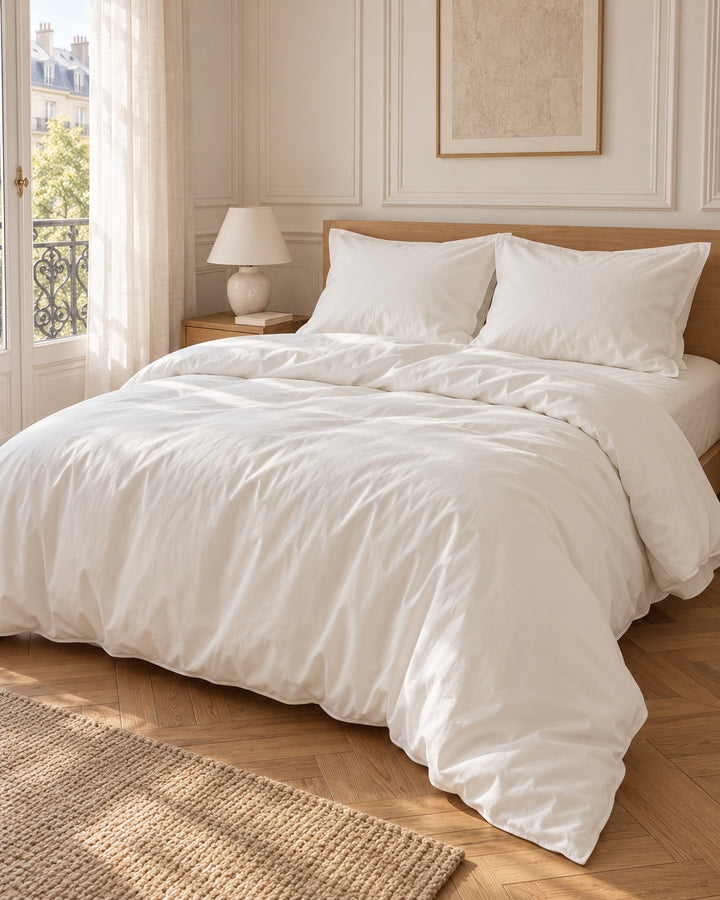
A plain off-white bed never goes wrong. It is the hotel industry's bet, and it has held for a century. Our hotel-style bed linen selection follows this logic.
It is not a question of looks. A cluttered bedroom lengthens the time it takes to fall asleep for a simple reason: every visible object is an unfinished task, and the brain replays them just when you ask it to let go.
Three steps are enough:
Sleep reacts to noise even when you do not wake up. That does not mean replacing a window.
What really helps: a thick rug (hard floors bounce everything back), heavy curtains that absorb some of the high-pitched street noise, the headboard against the most interior wall rather than the outside wall, and a constant background noise — a fan, an air purifier — that masks sudden sounds. A steady noise wakes you less than a silence broken by a scooter.
This is where money is best spent, provided you spend it in the right order.
| Item | What matters | How often to replace it |
| Mattress | Support, not surface softness. Always protected. | 8 to 10 years |
| Mattress protector | Waterproof but breathable, and quiet | 3 to 4 years |
| Pillow | Height, dictated by your sleeping position | 2 to 3 years |
| Duvet | Loft before price: too warm is the most common mistake | 5 to 8 years |
| Bedding set | The fabric, according to the season and your personal thermostat | Improves with age, only replaced if damaged |
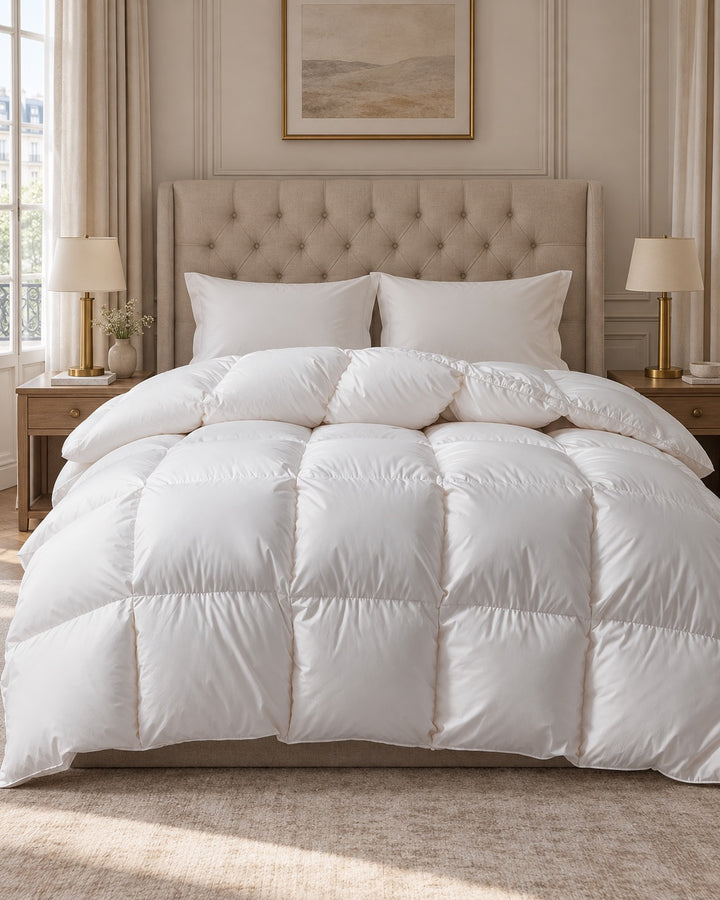
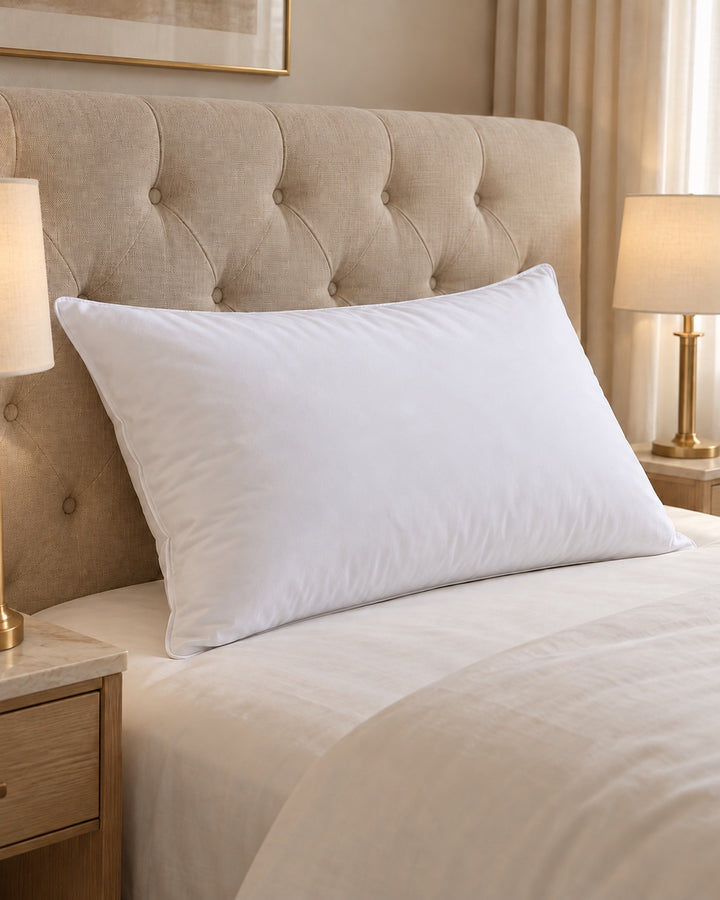
The pillow is the most often neglected item, yet it decides the state of your neck when you wake up: a side sleeper needs height, a stomach sleeper a flat pillow. The full selection is in Noctua pillows. As for duvets, the Hôtel 4 Seasons duvet keeps you warm without overheating, which makes it comfortable almost all year round, and the rest of the selection is in duvets.
Finally, an unprotected mattress absorbs the moisture of every night and ages faster: a waterproof, breathable mattress protector is the small investment that extends the life of the big one.
The problem is not only the light from the screen. It is the content: a news feed, a work email or an episode ending on a cliffhanger revives your attention at the very moment you are trying to lower it.
The most effective step, and the only one that lasts: charge your phone in another room. A €15 alarm clock settles the alarm argument. If that is too radical, at least switch on night mode an hour before bed and take the phone out of the bed — onto the chest of drawers, out of arm's reach.
A ritual does not need to be elaborate. It needs to be repeated. The body learns a sequence in about fifteen evenings and starts preparing for sleep from the first steps.
A sequence that works: turn down the heating, switch off the ceiling light and turn on only the bedside lamp, a warm shower, put away the three things lying around, draw the curtains, then ten to twenty minutes of reading in bed. The order matters less than the consistency.
Where to start, if you only do one thing this week: lower the bedroom to 18 °C and take your phone out of the room. These are the two free steps that show results fastest. The rest — fabrics, layers, palette — can be built calmly afterwards.
One last point, and it is not decorative. A bed made in the morning is a bed you are happier to get into at night. A taut fitted sheet, neat corners, a turn-down at the top of the duvet, pillows upright against the headboard: the sequence takes three minutes once you have the knack. Each step, hospital corner included, is explained in our article on making your bed like a hotel.
And for the result to last, the linen needs to be cared for properly: temperatures, drying and frequency are covered in our guide on how to wash and care for your bed linen. Linen improves wash after wash — one of the reasons a washed linen bedding set is kept for so long. A mulberry silk pillowcase, on the other hand, needs a gentler wash: by hand or in a laundry bag, at 30 °C maximum.
If you are starting with the linen, all Noctua bed linen is gathered in one place, fabric by fabric. Take the time to choose: a good bedding set lasts ten years.
Le journal


